What "Made in Italy" actually means (and the loophole most brands use)
If you've ever picked up a handbag with a small Made in Italy tag and assumed every step of its production happened in Italy, you're not alone — and you're probably wrong. The label is a legal claim with a specific definition, and the definition leaves a lot of room. Here is what's actually behind it.
By The Maison
The legal definition
Under the EU's Union Customs Code, a product can be labelled with a country of origin if that's where its last substantial transformation took place. "Substantial transformation" is the technical phrase, and it means the operation that gave the product its essential character.
For a handbag, the last substantial transformation is generally interpreted as the assembly and stitching of the finished bag — not the tanning of the leather, not the cutting of the panels, not the production of the hardware.
This means that under EU law, a bag whose leather was tanned in Bangladesh, cut into panels in Vietnam, and shipped to a small workshop in Italy for final stitching can legally carry the Made in Italy label. It is not fraud. It is the rule as written.
The loophole most brands use
The way the rule is written has produced an industry pattern. Mid-market brands looking for the prestige of an Italian label can outsource most of the work to lower-cost regions, then send the cut panels to a small Italian sub-contractor for the final assembly run.
The arrangement is sometimes called "finitura italiana" — Italian finishing. A label issued in Italy, real Italian hands on the bag for the final hour, but the leather, the cutting, sometimes even the hardware sourced and processed elsewhere.
It's not illegal. It's also not what most customers think they're paying for.
What "100% Made in Italy" can hide
There is a separate label — 100% Made in Italy — administered by the Italian Institute for the Protection of Italian Producers (IT.P.I.). It requires that at least four specific phases happen on Italian soil:
1. The selection of the materials.
2. The processing (tanning of leather).
3. The packaging.
4. The labelling.
Even 100% Made in Italy, however, does not require the leather to be raised on Italian animals — only that it be tanned in Italy. Most Italian-tanned leather is from European cattle, but the cowhide that becomes your bag may have started in Argentina, France, or Germany. That part is fine — tanning is where the leather becomes leather.
What the 100% label genuinely guarantees: the four phases above. What it doesn't tell you: the wage paid to the workers, the size of the workshop, the seriousness of the operation. A 100% Made in Italy bag can still be produced in a low-cost regional workshop using machine-only assembly. It just has to be in Italy.
The four real benchmarks
If you want to know whether a bag is seriously made in Italy — as opposed to legally labelled as such — there are four operations you want to verify happen there.
1. The tanning. Done at an Italian tannery — Walpier, Tannerie Haas's Italian operation, Conceria Volpi, or another member of the Italian vegetable-tanning consortium. This is what turns rawhide into usable leather, and it's where a lot of leather character is determined.
2. The cutting. Done by an Italian cutter, by hand or on a manual press, from a full hide. The quality of cutting determines how the grain flows across the bag, how the off-cuts are minimised, and how the panels match.
3. The stitching. Done in an Italian workshop, with body seams on Italian-quality machines (Pfaff, Necchi) and load-bearing points hand-saddle-stitched. Outsourced stitching is the most common shortcut.
4. The finishing. Edge paint, hardware setting, hot-stamping, polishing, quality check — all done in the same workshop, by the same team that did the assembly.
How to ask a brand the right question
If a brand answers all four with location + supplier name, you have a serious house. If a brand answers with "made in Italy" and nothing further, you are likely looking at finitura italiana.
Three questions that get past the label:
1. Where is your leather tanned, and which tannery? A real answer names a tannery and a town. A vague answer ("Tuscan tanneries") is a flag.
2. Where are the panels cut? Same.
3. Where are the bags stitched, and by how many artisans? A real answer names a workshop or village and a number. A vague answer ("Italian artisans") is a flag.
Most reputable houses will answer these directly. If they won't, you have your answer in another form.
What LIETA's "Made in Italy" means
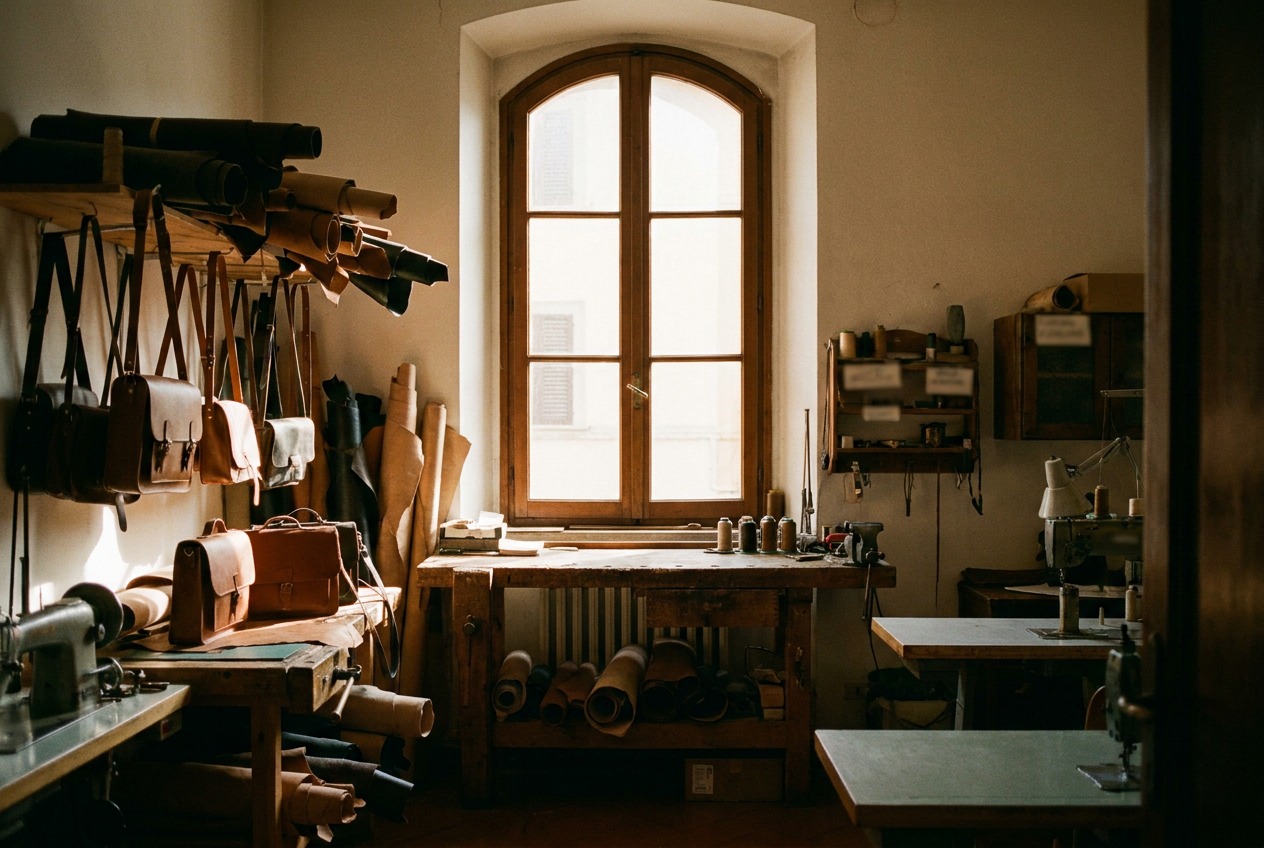
We work with one atelier in Scandicci, Florence. Eleven artisans, one floor. Every step of every bag happens within that building or within fifty kilometres of it.
Leather: Walpier Buttero, vegetable-tanned at Conceria Walpier in Castelfranco di Sotto, Tuscany — about fifty kilometres west of the atelier.
Cutting: By one cutter at the Scandicci atelier, by hand on a manual press, from a full hide.
Stitching: Side seams on a Pfaff industrial machine; handle attachments and structural tabs saddle-stitched by hand with French waxed linen thread.
Finishing: Edge paint in four coats (three sanding passes), wordmark hot-stamped, hardware seated, final wax polish — all at the same atelier.
Hardware: Solid brass cast in Vicenza, gold-plated in Arezzo. Riri Swiss zip.
Lining: Cotton drill milled and stitched in Italy.
When we say handmade in Scandicci, that is the specific claim — not a general claim about the country.
Frequently asked
- What does Made in Italy mean legally?
- Under EU law, a product can carry the Made in Italy label if the last substantial transformation — generally the assembly of the finished product — happened in Italy. The materials, components and earlier steps can come from anywhere. This is the standard EU origin rule, applied through the Union Customs Code.
- Is a Made in Italy bag really made in Italy?
- Not necessarily in the way most customers expect. Many bags labelled Made in Italy have their leather imported, cut and partially assembled elsewhere, and only the final stitching run done in Italy. This practice is sometimes called "finitura italiana" (Italian finishing). It is legal under EU rules; it is not what most customers picture.
- What's the difference between Made in Italy and 100% Made in Italy?
- The plain "Made in Italy" label requires only the last substantial transformation to happen in Italy. The "100% Made in Italy" label, administered by IT.P.I. (Istituto per la Tutela dei Produttori Italiani), additionally requires that materials selection, processing (tanning), packaging and labelling all happen in Italy. It's stricter — but still doesn't require the cattle to be Italian or set workshop-quality standards.
- How can I tell where a bag is really made?
- Ask the brand four specific questions: where is the leather tanned (and which tannery); where are the panels cut; where is the bag stitched (and by how many artisans); where is the finishing done. Serious houses answer with location + supplier name. Vague answers ("Italian artisans", "Tuscan tanneries") usually indicate finitura italiana — finishing-only Italian work.
- Where are LIETA bags made specifically?
- Every LIETA bag is made entirely in or near Scandicci, Florence. Leather is Walpier Buttero, tanned in Castelfranco di Sotto (50 km from the atelier). Cutting, stitching, edge-painting, hardware setting and finishing all happen in the same Scandicci workshop with 11 artisans. Hardware is cast in Vicenza and plated in Arezzo. Lining is milled and stitched in Italy. Nothing is outsourced past the tannery.
Also from the Journal
Strathberry vs LIETA: an honest comparison
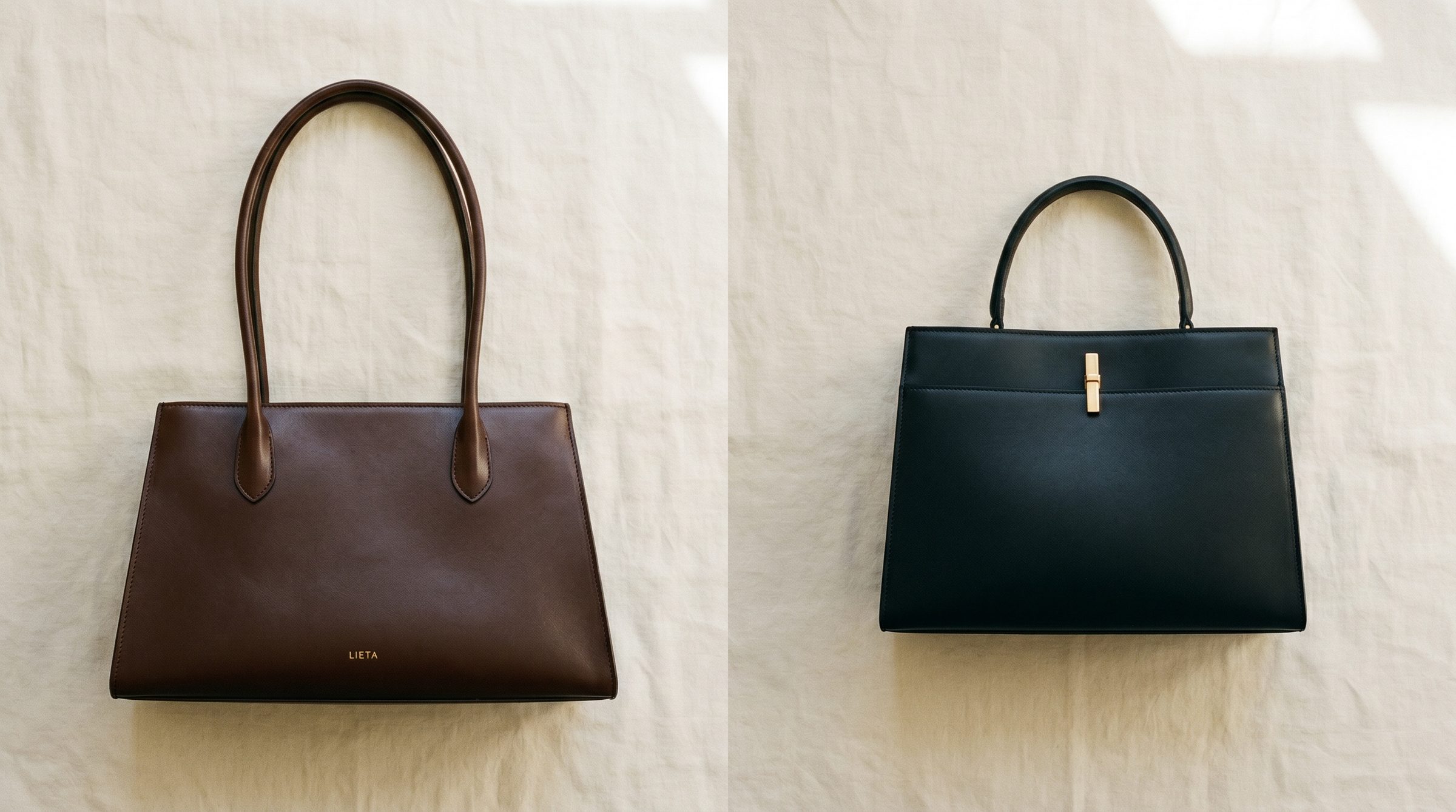
Strathberry made structured Scottish-designed leather bags famous after Meghan Markle carried the Midi Tote on her first royal engagement. Customers ask how we compare. Side by side, no marketing.
Mansur Gavriel vs LIETA: an honest comparison
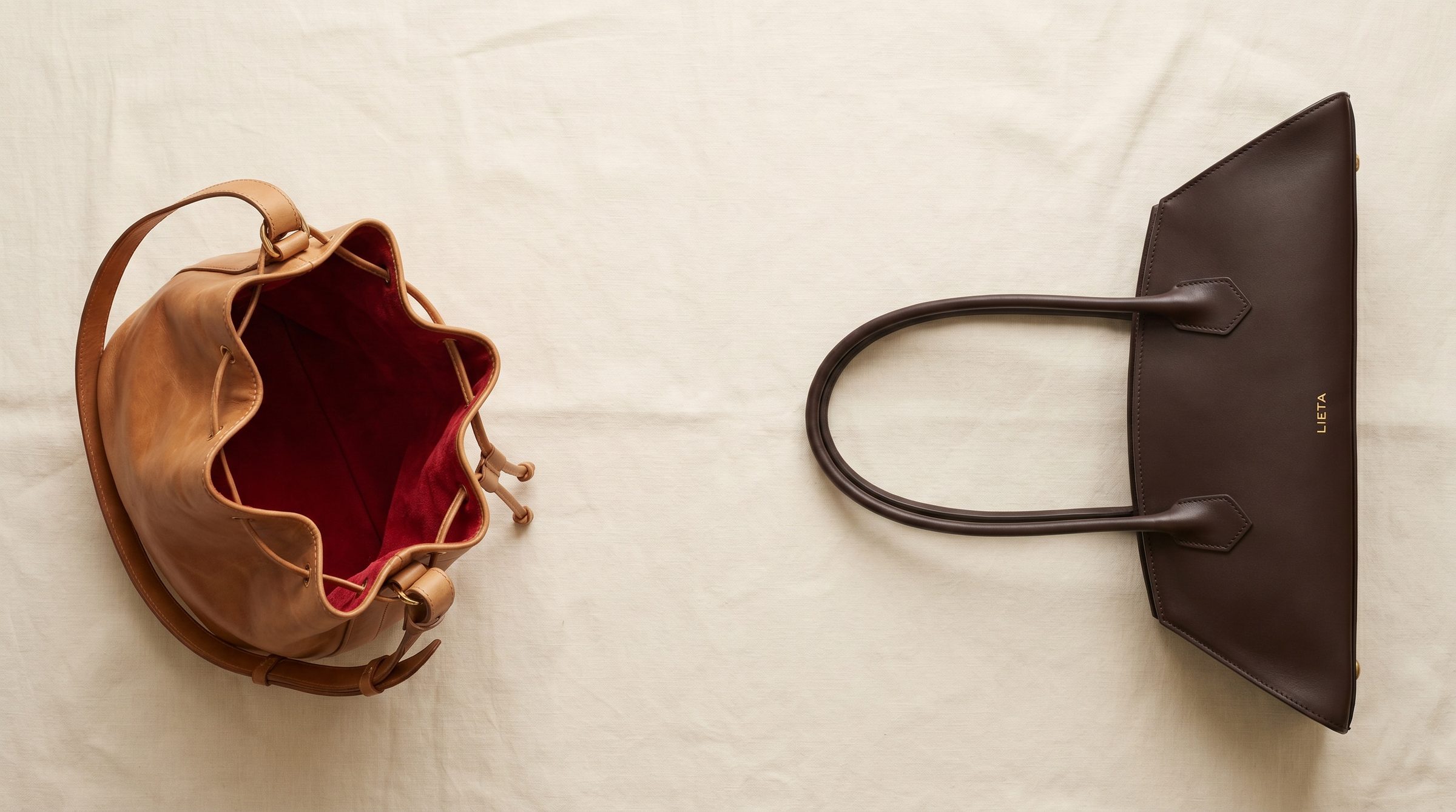
Mansur Gavriel built a New York cult on the unbranded bucket bag in vegetable-tanned Italian leather. Their materials overlap heavily with ours — but the price doesn't. Side by side, no marketing.
Wandler vs LIETA: an honest comparison
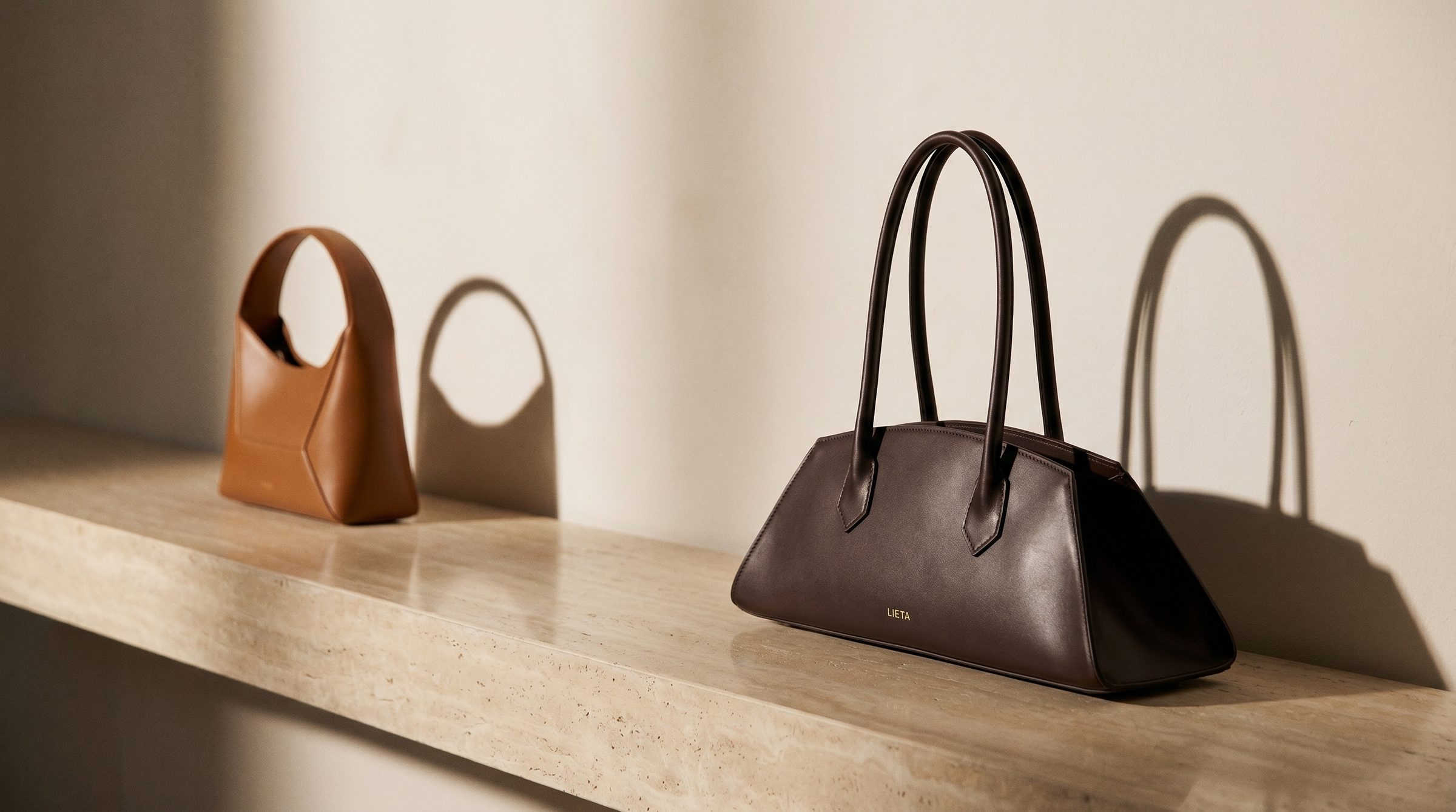
Wandler built an Amsterdam editorial cult on bold, architectural Italian-made leather bags between €600 and €1,200. Customers ask how we compare. Side by side, no marketing.