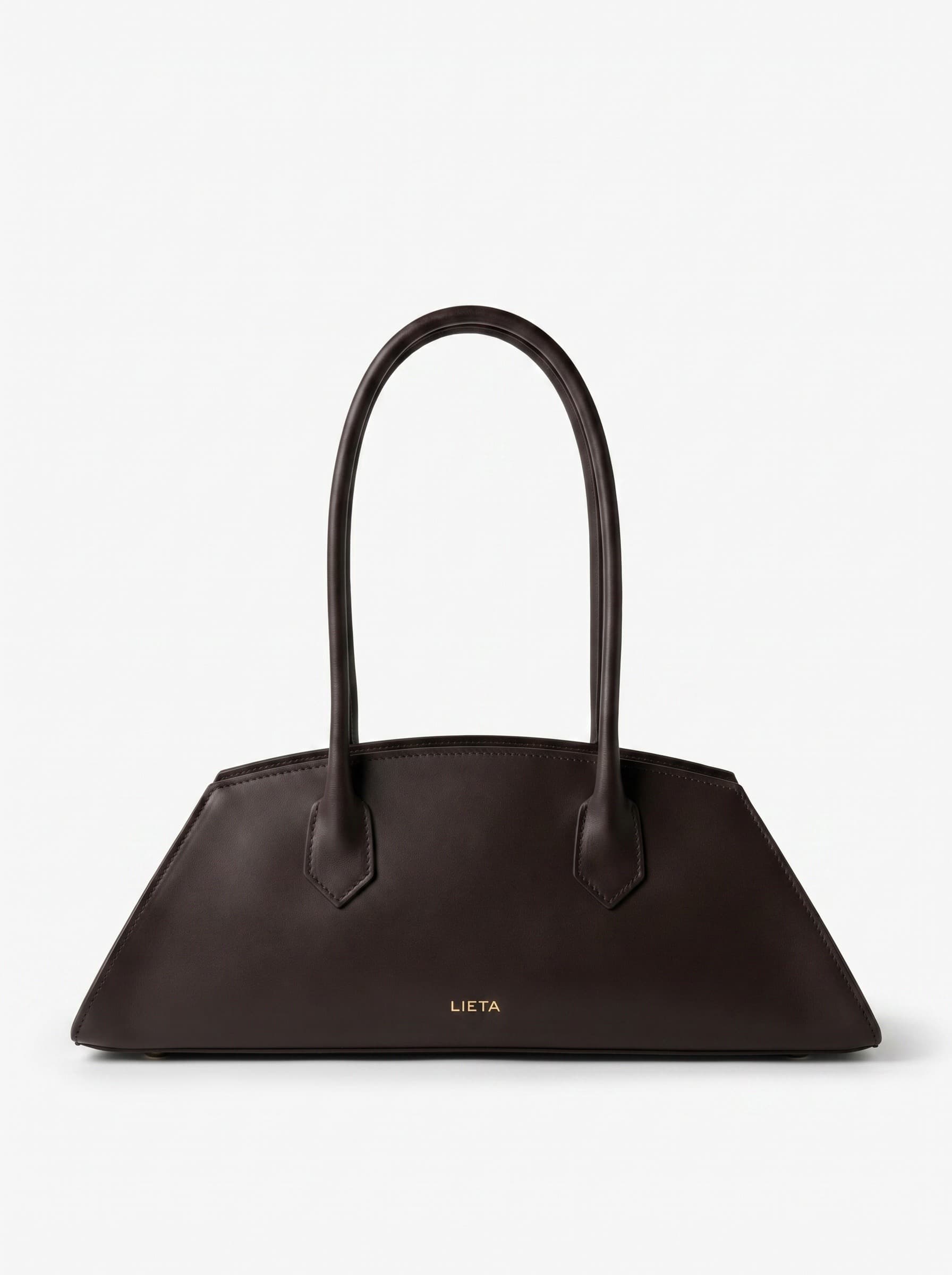
Why does a luxury handbag cost €4,000? The real markup breakdown
Once a year a journalist will publish an article titled something like "How much it really costs to make a Birkin" and a small wave of internet outrage follows for a few days. Then everyone forgets and goes back to wanting a Birkin. This piece is not outrage. It is just the maths. If you're going to spend €450 on a Polène or €4,000 on a Hermès or €255 on a LIETA, it helps to know where the money goes.
By The Maison
The materials cost
A medium-sized handbag in full-grain Italian calf leather uses roughly 1.5 to 2.5 square metres of hide, depending on the silhouette and how much is cut around defects.
Walpier Buttero — the leather we use, and one of the better calf leathers on the market — wholesales for around €55 to €85 per square metre. Top-grade hides from Tannerie Haas (the French tannery many luxury houses use) run a little higher, around €80-110. Cheap chrome-tanned imports from outside Europe can come in under €30. Italian vegetable-tanned calf, the serious end of the market, sits in the €60-100 band.
So the raw leather cost for one finished bag is typically €70 to €120. Hardware (zipper, plated brass loops, feet, branding plates) is another €20-50. Lining is €5-15. Thread, glue, packaging materials maybe another €10. The interior dust bag and presentation box add €8-20 on top.
Total materials: roughly €115-€220 per bag, for a piece of meaningful quality.
The labour cost
Italian leather-goods artisans in Scandicci earn between €14 and €22 per hour, depending on seniority and the workshop. Hand saddle-stitchers at the top of the trade are paid more.
A handbag of moderate complexity — cut, machine-stitched body, hand-saddle-stitched handles, edge paint, finishing — takes between 6 and 14 hours of skilled work, split across several artisans. The Lungo takes roughly 8.
So the labour cost per bag is typically €100 to €280. Birkin bags famously take 18-25 hours of work and are paid for at the high end of the wage scale, so labour alone on a Birkin is in the €450-€700 range. Still nowhere near the sticker.
Add a modest workshop margin (15-25%) and you get total cost ex-factory of roughly €260 to €600 for the typical handmade Italian bag, or €700 to €1,100 for a Birkin.
What makes up the rest of the €4,000 price tag
There are five large costs that get added between the workshop door and the customer's hand. They're real costs — but they're not craft, and you should know you're paying for them.
1. Real-estate
Place Vendôme, Avenue Montaigne, New Bond Street, Madison Avenue, Ginza — these are the most expensive retail rents on earth. Rents on Avenue Montaigne sit around €15,000 per square metre per year. A two-storey flagship can cost €5-€10 million annually just in rent.
Hermès has roughly 300 boutiques worldwide. Louis Vuitton has 460. Each one has to pay for itself. The fixed cost is enormous, and it gets recovered through the price of every bag sold.
2. Marketing
Campaigns, fashion week productions, fragrance ads that double as bag ads, celebrity contracts, sponsored magazine covers, runway shows. Combined marketing spend for the top luxury houses is in the 15-25% of revenue band, depending on the year.
For a €4,000 bag, that's €600-€1,000 of your money paying for advertising you saw before you bought.
3. Brand equity (the logo tax)
This one is the hardest to quantify and the largest in practice. Brand equity is the accumulated reputation that lets a house charge ten times what its competitors charge for the same materials and labour. It is built over decades through advertising, association with the right people, and scarcity.
It is real — being seen with a Birkin signals something specific to the people who care about signals — and you are entitled to pay for it if that's what you want. But you should be clear that it's what you're paying for. It is not in the bag.
4. The distribution chain
Wholesale margins (when a house sells through department stores) take another 40-60% of the retail price. Even direct-to-consumer houses build the equivalent into their pricing to keep things consistent with wholesale channels.
Then add VAT (19-22% across the EU), import duties for non-EU customers, and bank-card processing fees of 1.5-3%.
5. Profit
The Kering and LVMH conglomerates routinely report operating margins of 25-40% on their leather-goods divisions. Hermès, the most profitable, runs even higher.
A €4,000 bag with €700 of production cost is delivering €1,000-€1,500 of operating profit per unit, after all the real-estate and marketing costs have been paid.
Where LIETA fits in
We use the same quality of materials. We use the same Tuscan supply chain. The bag in your hands costs roughly €120 in materials and roughly €110 in labour — call it €230 of production cost for the Lungo at €255.
We charge €255 because we don't have Place Vendôme rent to pay, we don't run celebrity campaigns, and we don't run a wholesale distribution chain. There is a modest margin that keeps the maison alive and pays for shipping, customer support, and a small team. There is no logo tax.
We're not arguing you shouldn't buy a Birkin. People buy Birkins for reasons that have nothing to do with materials — and that is allowed. We're arguing that if you want the materials, the craft, and the feel of a serious Italian leather bag, you don't have to pay €4,000 for them.
Frequently asked
- How much does it actually cost to make a luxury handbag?
- For a handmade Italian leather bag of meaningful quality, the cost ex-factory is roughly €260-€600. This covers €115-€220 of materials (leather, hardware, lining, packaging), €100-€280 of skilled labour (6-14 hours of artisan work), and a 15-25% workshop margin. Top-end pieces like a Birkin reach €700-€1,100 ex-factory due to the 18-25 hours of hand-stitching.
- Why are Hermès Birkin bags so expensive?
- A Birkin's €5,000+ retail price reflects roughly €700-€1,100 of production cost plus very large additions for boutique real-estate (rents on Avenue Montaigne run €15,000/m²/year), marketing campaigns (15-25% of revenue), brand-equity / scarcity pricing, and the operating margins of luxury conglomerates (25-40%). Materials and craft account for a small share of the sticker price.
- What is the actual markup on a luxury handbag?
- Industry markup ratios for high-end handbags typically run 8-12x the production cost. A €4,000 bag with €350 of production cost is marked up about 11x. The maths gives roughly €600-€1,000 to marketing, €500-€1,500 to real estate, and €1,000-€1,500 to operating profit after VAT and distribution costs.
- Is it possible to get the same quality at a lower price?
- Yes — if you find a brand that uses the same Italian supply chain (Walpier or Tannerie Haas leather, Scandicci artisans, full-grain calf, hand saddle-stitched details) without operating flagship boutiques on Place Vendôme. LIETA's Lungo at €255 uses the same Walpier Buttero calf and the same Scandicci workshops as multiple unnamed luxury houses, at roughly the production cost plus a modest margin.
Also from the Journal
Where Hermès bags are actually made (and why ours come from the same district)
Ask where your Hermès Birkin is made and the honest answer surprises most people. It's not Paris. The leather, the cutters, much of the work — they all travel through the same Italian leather district we work with. Here's a tour.
Buttero leather: what it is and why we use it
If you've ever held a serious saddle, a high-end belt, or a properly made boot, you've probably touched Buttero leather without knowing it. Here's what it is, where it comes from, and why it ages so well.