DeMellier vs LIETA: an honest comparison
DeMellier is the British house our European customers compare us to most often after Polène. Founded in London in 2015 by Mireia Llusia-Lindh, they make precise, structured, Spanish-produced leather bags at prices well below traditional luxury — and they fund a vaccine pledge for every bag sold, which is genuinely admirable. We get asked frequently how a LIETA compares to a Mini Venice or a Mini Tokyo. Here's the honest answer, side by side.
By The Maison
Why this comparison is fair
DeMellier and LIETA are doing close-to-the-same thing — selling crisply designed European leather bags at prices that don't pay for a Place Vendôme rent or a Charlize Theron campaign. Our customers often consider both, and customers who care about brand purpose often lean DeMellier specifically because of their vaccine programme.
Where we differ: production country, leather choice, silhouette range, and price. So this is a fair comparison, not a hit piece.
The price gap
DeMellier's popular bags — Mini Venice, Mini Tokyo, Verona, Cannes, Vancouver — sit between €295 and €595. Their Soho clutch and small Cannes are at the lower end; the Vancouver and large totes reach €595.
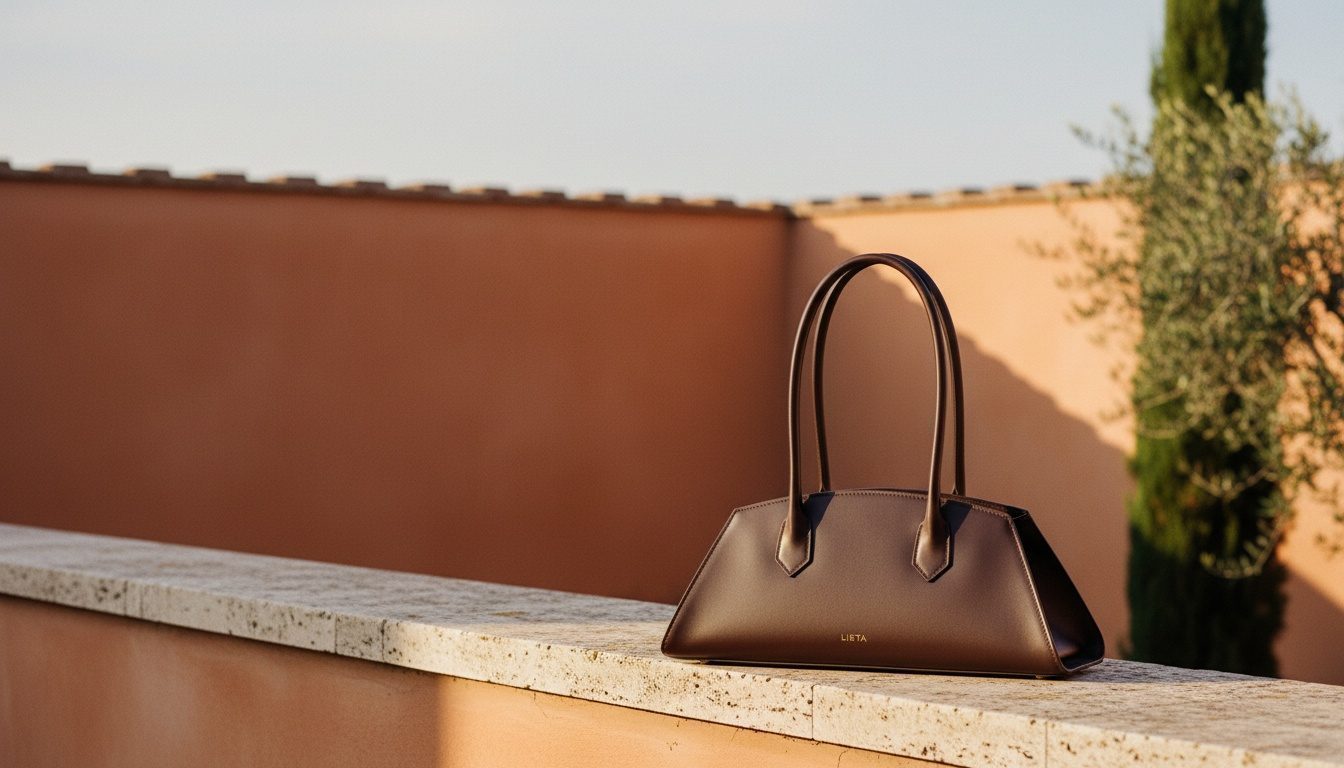
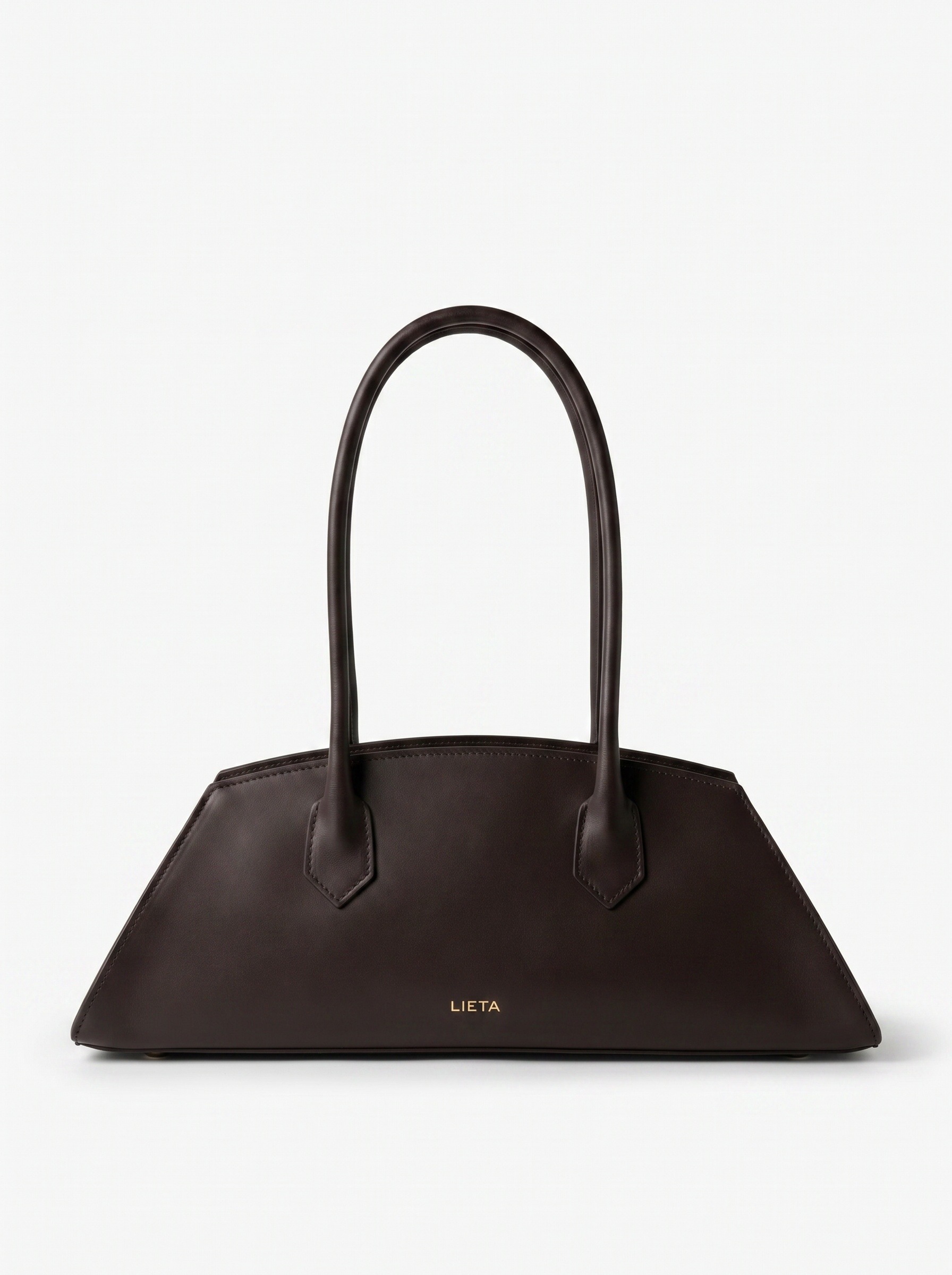
The Lungo at LIETA is €255. Vegetable-tanned full-grain Italian calf (Walpier Buttero), made in Scandicci, Florence.
We're about the same price as their smallest pieces (Mini Soho, Mini Cannes) and meaningfully cheaper than the Mini Venice, Mini Tokyo and Vancouver.
The leather
DeMellier uses smooth, grained, and pebbled calf leather from Spanish and Italian tanneries, with some lambskin on specific styles. They are not always specific about which tannery on which product, but the leather is real, full-grain, and clearly above the entry tier — you can feel the structure.
LIETA uses Walpier Buttero exclusively — vegetable-tanned full-grain Italian calf from Castelfranco di Sotto in Tuscany, used by the high end since 1973.
Both are real leather. The two key differences: (a) DeMellier's mainline pieces are mostly chrome-tanned with a smooth or pebbled finish — they hold colour well and resist water but develop little patina; (b) LIETA's Buttero is vegetable-tanned with a more naturally living surface — it patinates noticeably over years. Neither approach is wrong. DeMellier's leather is closer to what you'd find on a Mulberry Bayswater or a Loewe Puzzle; LIETA's is closer to what you'd find on a Loewe Flamenco or an Hermès Bolide.
Where each is made
DeMellier manufactures in León, Spain — northern Spain has a long, serious leather tradition with workshops that also supply Loewe and a portion of Saint Laurent and Celine. The workshops are real, well-paid, and operate to a documented ethical standard. DeMellier publishes a transparency report.
LIETA manufactures in Scandicci, Florence — the Tuscan leather district that supplies Gucci, Prada, Celine, Saint Laurent, Loewe and a portion of Hermès.
Neither answer is wrong. Spanish leather workshops and Italian leather workshops are at comparable levels of craft. Scandicci is the larger concentration of expertise, but León is genuinely serious — Loewe is not made anywhere lower-skill than Scandicci, and Loewe is made in Spain.
The construction
DeMellier's bags are machine-stitched in the body, with hand-finished edges, hand-applied lining, and hand-set hardware. The Mini Venice's structured form is achieved with a sewn-in canvas frame, then leather-wrapped — a technique that produces the crispness their customers like and that wouldn't be possible with fully hand-stitched construction.
LIETA uses the same machine-stitched body, with hand saddle-stitching at the handle attachment points. Edges are painted (four coats, hand-burnished) in a colour matching the leather.
Construction is broadly comparable. DeMellier's bag bodies are more architecturally constructed — the rigidity is the point — while LIETA's are slightly softer, more clochette-shaped. Different building philosophies, both done competently.
The hardware
DeMellier uses brass and palladium-finished metal hardware, with their own signature "D" closure on most styles. Hardware is solid metal with quality plating. They don't publicly name the zipper supplier.
LIETA uses solid brass, gold-plated in Arezzo (Tuscany), with Riri Swiss zippers throughout. Riri is one of two zipper makers (the other is Lampo) used by Hermès, Chanel and Prada.
Hardware feel is broadly comparable. The Riri zipper is a marginal step up. DeMellier's signature D-closure is a distinctive design choice that LIETA doesn't compete on — we don't use a branded clasp.
The vaccine pledge
This is the part of DeMellier's brand most customers find most compelling, and it should be acknowledged: for every bag sold, DeMellier funds a set of vaccines through a partnership with UNICEF and Vision Spring. They have funded over 100,000 vaccines since launch. This is a real, audited programme, not a marketing claim.
LIETA does not currently fund a comparable programme. We are a smaller brand at an earlier stage, and we want to be honest about that rather than invent something to match. We are open about it: as we grow, this is a category of commitment we may take on, but we will not announce a pledge before we can actually fund it.
If brand purpose is the reason you're considering DeMellier — that is a legitimate reason and we would not try to talk you out of it.
Packaging and presentation
DeMellier ships in a printed cotton dust bag inside a discreet box. Clean, branded, well-considered.
LIETA ships in a chocolate-linen presentation box with a grosgrain ribbon, an ivory cotton dust bag, a serial-numbered authenticity card, and a care leaflet. The outer shipper is brown kraft with no visible branding.
Both are appropriate; neither drives the buying decision.
So why are we cheaper?
Three reasons.
1. Lower brand overhead. DeMellier is a decade in, has wholesale relationships, Net-A-Porter placement, a recognised brand campaign, and ships globally with full marketing infrastructure. That overhead gets added to the price. LIETA is younger and direct-only.
2. Fewer SKUs. DeMellier carries roughly 12 silhouettes across multiple leathers and colours — 60+ active SKUs. LIETA carries one silhouette (The Lungo) in four colourways.
3. No vaccine pledge. DeMellier's vaccine programme is a real cost they take on per bag sold. It's a deliberate choice and it's worth knowing it's reflected in price — it's not pure markup, it's funding something. We are not making the same trade.
Which one should you buy?
If you want a structured, architectural, briefcase-adjacent silhouette in chrome-tanned smooth or pebbled leather, with a brand-purpose story and a signature D-closure — DeMellier. The Mini Venice especially is one of the most quietly successful designs of the last decade and earns its price.
If you want a quieter, east-west, Hermès-aware top-handle with vegetable-tanned single-tannery Buttero leather and made in Scandicci specifically, at a lower price — LIETA.
If brand purpose matters to you above material specifics — DeMellier. If material specifics and visible patina matter to you above brand purpose — LIETA. Both are honest answers and we would not try to argue you out of either.
Frequently asked
- Is DeMellier worth it?
- Yes. DeMellier uses real full-grain leather, solid hardware, produces in real Spanish workshops (León), and funds a vaccine pledge per bag sold through UNICEF and Vision Spring. At €295-€595 they are priced well below traditional luxury (€2,000+) for comparable materials. The Mini Venice has been one of the quietly successful bag designs of the last decade.
- What's the difference between DeMellier and LIETA?
- Both are accessible-luxury European leather brands. DeMellier produces in León, Spain, uses chrome-tanned smooth and pebbled calf across 12+ silhouettes at €295-€595, and funds a vaccine pledge per bag. LIETA produces in Scandicci (Florence), uses Walpier Buttero (vegetable-tanned full-grain Italian calf) exclusively in one silhouette (The Lungo) across four colourways at €255. DeMellier is more architectural and structured; LIETA is more east-west and Hermès-aware.
- Where are DeMellier bags made?
- DeMellier manufactures in León, in northern Spain — a region with a long leather tradition that also supplies Loewe and a portion of Saint Laurent and Celine. DeMellier publishes a transparency report about their workshop standards.
- Is DeMellier leather good quality?
- Yes. DeMellier uses real full-grain calf leather — smooth, grained or pebbled depending on style — sourced from Spanish and Italian tanneries. Most mainline pieces are chrome-tanned, which means they hold colour well and resist water but develop little patina. The leather is clearly above the entry tier; you can feel the structure.
- If I can't decide between DeMellier and LIETA, which should I buy first?
- If you want a structured, architectural shape (briefcase-like, framed body), buy a DeMellier Mini Venice or Mini Tokyo. If you want a softer east-west top-handle with vegetable-tanned leather that ages visibly, buy a LIETA Lungo. If brand-purpose matters more than material specifics to you, DeMellier. If material specifics matter more, LIETA. Both are honest answers.
Also from the Journal
Birkin alternatives: the honest list — 8 brands actually worth knowing
If you've searched "Birkin alternative" you've already found a hundred listicles. Most of them are SEO sludge — bags ranked by Amazon affiliate commissions, not by leather. This is the real list. Eight brands that genuinely give you the craft for less, ranked by materials, country of production, and what you'd pay if there was no logo on the front.
What "Made in Italy" actually means (and the loophole most brands use)
There's a difference between a Made in Italy bag and a bag made in Italy. The legal definition is much looser than most people assume. Here's what the label actually guarantees, what it doesn't, and how to ask a brand the right question.
Why does a luxury handbag cost €4,000? The real markup breakdown
A €4,000 handbag isn't €4,000 of materials. The leather costs what the leather costs. The stitching takes the hours it takes. So what makes up the rest of the price tag? We did the maths.